Off-leash ranch vs. dog park: what you need to know
Understanding the real differences for your dog's safety and happiness
By Natalie Walsh, , 5 min read
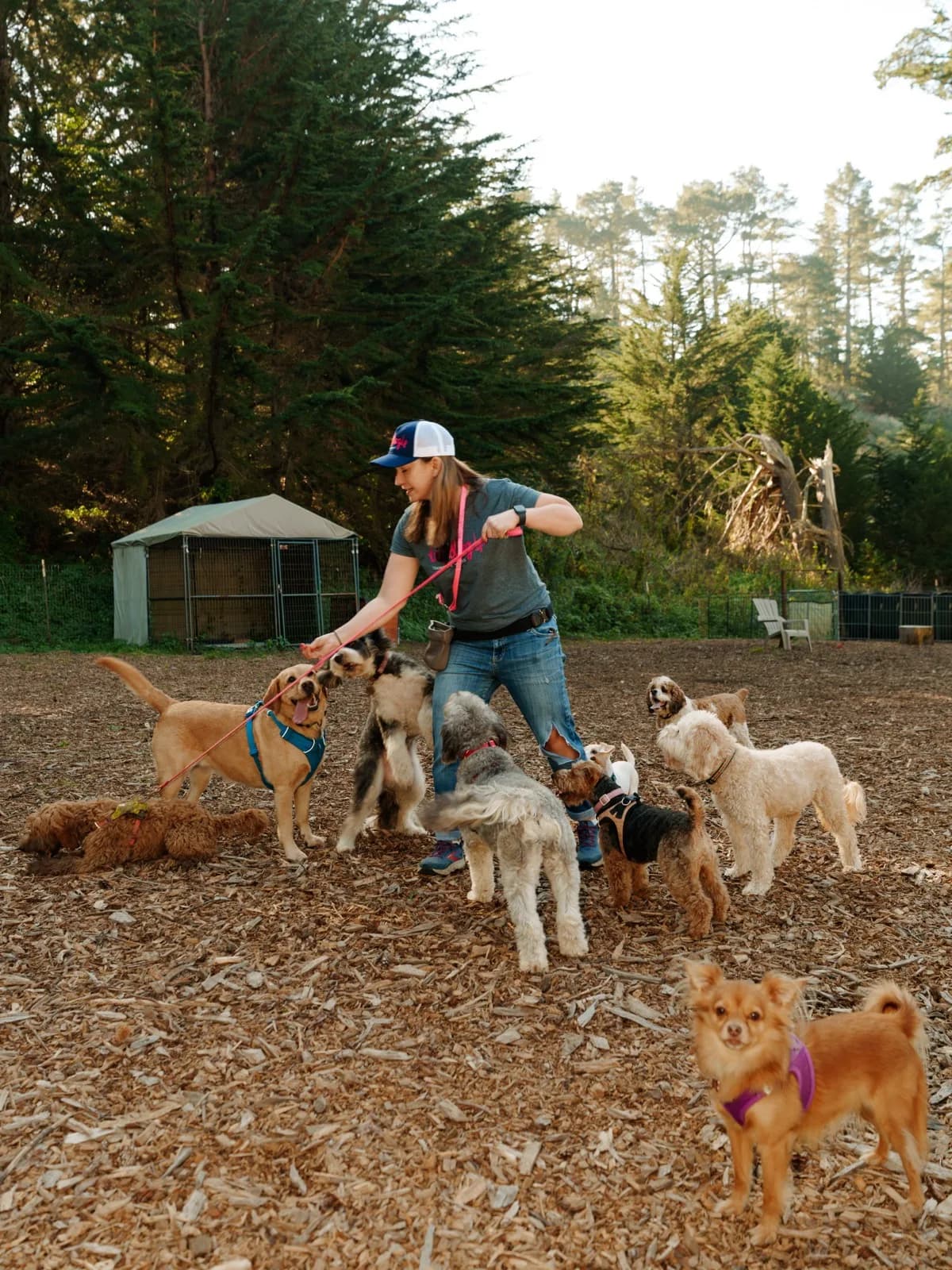
Letting your dog run, play, and socialize off-leash is essential for their physical and mental well-being. For many dog owners, the default option is the local dog park, but dog parks aren’t the only (or always the best) choice.
At Top Dog SF, we’re often asked how our signature off-leash ranch experience compares to traditional dog parks. The difference goes far beyond space: it’s about safety, structure, and quality of interaction.
Here’s what every dog owner should know before deciding where their dog plays off-leash.
The dog park experience: pros and limitations
Dog parks can be convenient and free, and for some dogs they can be enjoyable. However, they also come with unpredictability.
Common challenges at dog parks:
- Dogs of all sizes, ages, and temperaments mixed together
- No professional supervision
- Inconsistent owner attentiveness
- Unknown training histories
- Limited ability to intervene early
While many visits go smoothly, issues often arise quickly and without warning.
What makes an off-leash ranch different?
An off-leash ranch is a curated, supervised environment designed specifically for safe group play and enrichment.
At a ranch-style program:
- Dogs are screened and temperament-matched
- Playgroups are intentionally structured
- Trained professionals supervise every interaction
- Dogs have space to move naturally, explore, and decompress
- Behavior is guided, not corrected after things escalate
This structure changes everything.
1. Supervision vs. self-policing
Dog park
Dogs are expected to “work it out,” with owners stepping in only when problems become obvious.
Off-leash ranch
Experienced handlers monitor body language, energy levels, and play styles, stepping in before tension escalates.
Early intervention prevents:
- Bullying behaviors
- Over-arousal
- Fear responses
- Negative learning experiences
2. Quality of socialization
Not all socialization is good socialization.
Dog park socialization often reinforces:
- Pushy play
- Ignoring recall
- Overstimulation
Ranch socialization focuses on:
- Calm greetings
- Appropriate play styles
- Confidence-building interactions
- Respect for boundaries
Dogs don’t just burn energy. They learn how to be good social citizens.
3. Space to move naturally
Dog park: most dog parks are small, fenced areas with limited stimulation.
An off-leash ranch offers:
- Open land
- Natural terrain
- Trails, fields, and enrichment opportunities
- Room for dogs to run, sniff, explore, and rest
This type of environment supports:
- Better physical conditioning
- Mental enrichment
- Reduced stress and frustration
4. Safer group dynamics
In a ranch setting:
- Dogs are grouped by size, temperament, and play style
- Overwhelming interactions are avoided
- Shy dogs aren’t pressured
- High-energy dogs are guided appropriately
This leads to more balanced play and fewer negative experiences.
5. Less risk of injury and illness
Dog parks carry inherent risks:
- Fights breaking out suddenly
- Accidental injuries
- Exposure to illness or parasites
- Toys or food causing resource guarding
Off-leash ranch programs significantly reduce these risks through:
- Controlled environments
- Consistent sanitation practices
- Professional oversight
- Clear safety protocols
6. Dogs come home happier and calmer
One of the biggest differences dog owners notice is post-play behavior.
After dog parks:
- Dogs may be overstimulated
- Some show increased reactivity or poor recall
After ranch outings:
- Dogs are physically satisfied
- Mentally enriched
- Calm and relaxed at home
This is the difference between chaotic energy release and purposeful enrichment.
Which fits which dog?
Dog parks may work for:
- Highly social, well-trained dogs
- Owners who closely supervise
- Occasional, short visits
Off-leash ranch programs are ideal for:
- Dogs who love structured play
- Owners who value safety and supervision
- Dogs needing enrichment beyond a fenced park
- Busy dog parents who want expert handling
Not in San Francisco? Start the free puppy training taster at Top Dog SF Academy