Puppy playcare vs. dog boarding: what you need to know
By Natalie Walsh, , 5 min read
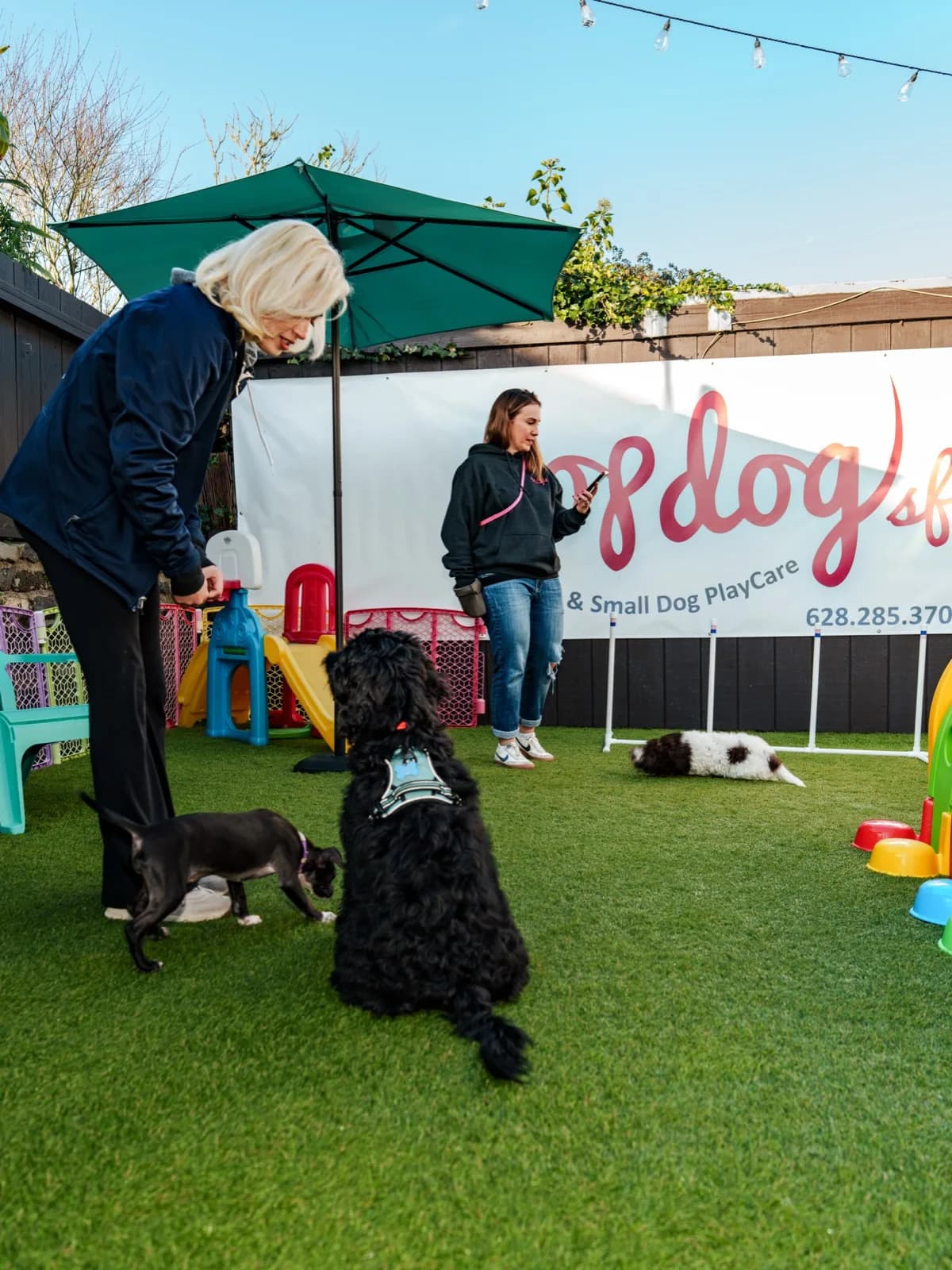
When life gets busy, finding the right care for your puppy can feel overwhelming. Many dog parents find themselves choosing between puppy playcare and dog boarding, but these two options serve very different purposes.
At Top Dog SF, we often help puppy owners understand which option best supports their dog’s development, routine, and emotional well-being. Making the right choice early can have a lasting impact on your puppy’s confidence and behavior.
Here’s what you need to know before deciding.
What is puppy playcare?
Puppy playcare is a daytime, structured care experience designed specifically for young dogs. It focuses on:
- Supervised play
- Age-appropriate socialization
- Gentle structure and routine
- Positive interactions with people and other puppies
Puppy playcare is ideal for building social skills while still supporting healthy development.
What is dog boarding?
Dog boarding is typically overnight care when owners are traveling or unavailable. Dogs stay at a facility for one or more nights and receive:
- Basic care (feeding, potty breaks)
- Limited group or individual play
- A place to sleep and rest
Boarding prioritizes safety and accommodation, not development or training.
Key differences between puppy playcare and dog boarding
1. Purpose and goals
Puppy playcare
- Focuses on socialization and enrichment
- Supports confidence-building and healthy play habits
- Designed to complement training and development
Dog boarding
- Focuses on supervision and care while owners are away
- Not typically structured around learning or social growth
2. Socialization opportunities
Puppy playcare
- Carefully matched playgroups
- Supervised interactions
- Positive exposure to new experiences
Dog boarding
- Limited or inconsistent socialization
- Playtime may be brief or optional
- Less emphasis on structured interaction
Early socialization is critical for puppies, and playcare environments are designed with this in mind.
3. Structure and routine
Puppy playcare
- Predictable schedules
- Rest periods balanced with play
- Gentle guidance and redirection
Dog boarding
- Routines vary depending on facility and length of stay
- Focused on accommodation rather than daily rhythm
Puppies thrive on consistency, which helps reduce stress and overstimulation.
4. Emotional experience
Puppy playcare
- Puppies return home each day
- Familiar home routine is maintained
- Lower stress for many young dogs
Dog boarding
- Overnight separation from home and family
- Can be stressful for some puppies, especially younger ones
- Better suited for short-term necessity rather than routine care
5. Impact on behavior at home
Puppy playcare
- Often leads to calmer behavior at home
- Supports positive social habits
- Helps puppies learn how to interact appropriately
Dog boarding
- Neutral impact on long-term behavior
- Not intended to shape social skills or manners
Which fits which owner?
Puppy playcare is a great fit if you:
- Work during the day
- Want your puppy to build social confidence
- Value structured, supervised interaction
- Want enrichment beyond basic care
Dog boarding may be appropriate if you:
- Are traveling overnight or longer
- Need temporary accommodation
- Have an older, independent dog accustomed to boarding
For many puppy owners, playcare becomes part of a healthy weekly routine, while boarding is reserved for occasional needs.
Setting your puppy up for long-term success
The choices you make early in your puppy’s life shape how they interact with the world as adults. Thoughtful care environments help puppies develop:
- Confidence
- Healthy play skills
- Emotional balance
- Positive social behaviors
Understanding the difference between playcare and boarding helps ensure your puppy gets the experience that best supports their growth.
Not in San Francisco? Start the free puppy training taster at Top Dog SF Academy