Official AKC Canine Good Citizen evaluation
CGC evaluation
Official CGC evaluation for dogs who are already trained and ready to earn their AKC certification. All 10 skills evaluated, AKC certificate upon passing.
$200 for the official AKC CGC evaluation.
- 4.9 from 200+ Google reviews
- Certified trainers since 2004
- Fully insured
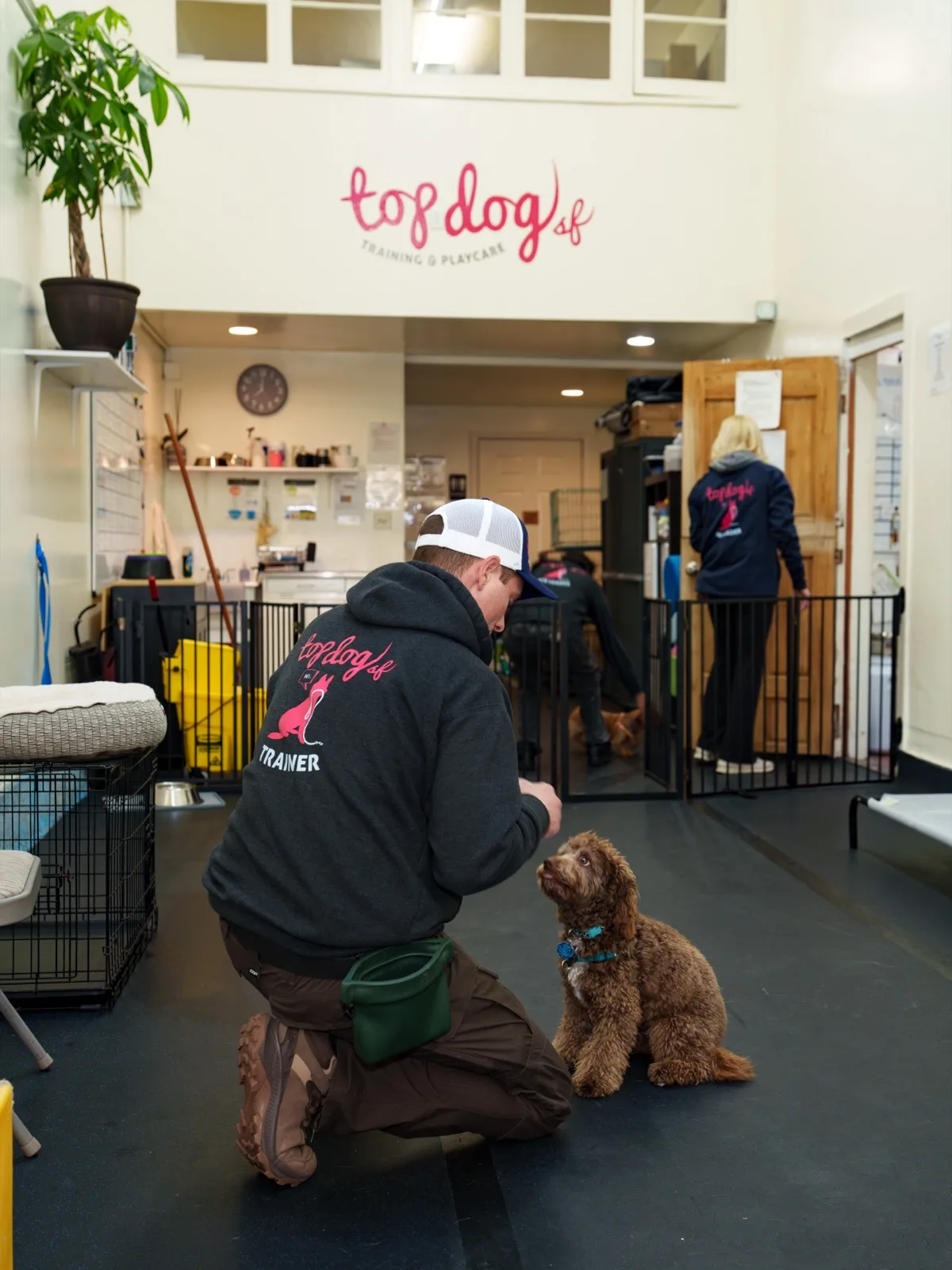
Is your dog ready to earn their AKC Canine Good Citizen title?
Michael Rollins is a Certified Professional Dog Trainer, Knowledge and Skills Assessed (CPDT-KSA) and AKC Canine Good Citizen evaluator. Top Dog SF offers official CGC evaluations for dogs who are already well-mannered and prepared for evaluation without additional training.
During the evaluation, your dog will be assessed on the ten required CGC skills, including polite leash walking, greeting strangers with good manners, reliable obedience cues, and remaining calm around everyday distractions. Our goal is to create a fair, supportive, and stress-free evaluation experience that showcases your dog's best behavior.
If you believe your dog is evaluation-ready and simply needs the official evaluation, we're here to help you take that final step toward earning this respected AKC certification.
- AKC certified evaluatorMichael Rollins, CPDT-KSA
- Official evaluation10 CGC skills evaluated
- Fair & supportiveStress-free evaluation experience
The 10 CGC test items
The Canine Good Citizen test evaluates dogs on 10 specific skills that demonstrate good manners and responsible ownership.
1.Accepting a friendly stranger
This test demonstrates that the dog will allow a friendly stranger to approach it and speak to the handler in a natural, everyday situation.
How it works: The evaluator approaches the dog and handler and greets the handler in a friendly manner, ignoring the dog. The evaluator and handler do a pretend handshake (hands not touching) and exchange pleasantries. The dog must show no sign of resentment or shyness.
2.Sitting politely for petting
This test demonstrates that the dog will allow a friendly stranger to touch it while it is out with its handler.
How it works: With the dog sitting at the handler's side, to begin the exercise, the evaluator pets the dog on the head and body. The handler may talk to his or her dog throughout the exercise. The dog may stand in place as it is petted. The dog must not show shyness or resentment.
3.Appearance and grooming
This test demonstrates that the dog will welcome being groomed and examined and will permit someone, such as a veterinarian, groomer, or friend of the owner, to do so. It also demonstrates the owner's care, concern, and sense of responsibility.
How it works: The evaluator examines the dog to determine if it is clean and groomed. The dog must appear to be in healthy condition (i.e., proper weight, clean, healthy, and alert). The handler should supply the comb or brush commonly used on the dog. The evaluator then softly combs or brushes the dog, and in a natural manner, lightly examines the ears and gently picks up each front foot. It is not necessary for the dog to hold a specific position during the examination, and the handler may talk to the dog, praise it, and give encouragement throughout.
4.Out for a walk (walking on a loose lead)
This test demonstrates that the handler is in control of the dog when the dog is walking on a leash.
How it works: The dog may be on either side of the handler. The dog's position should leave no doubt that the dog is attentive to the handler and is responding to the handler's movements and changes of direction. The dog need not be perfectly aligned with the handler and need not sit when the handler stops. The evaluator may use a pre-plotted course or may direct the handler/dog team by issuing instructions or commands. In either case, there should be a right turn, left turn, and an about turn with at least one stop in between and another at the end. The handler may talk to the dog along the way, praise the dog, or give commands in a normal tone of voice. The handler may sit the dog at the halts if desired.
5.Walking through a crowd
This test demonstrates that the dog can move about politely in pedestrian traffic and is under control when on leash in public.
How it works: The dog and handler walk around and pass close to several people (at least three). The dog may show some interest in the strangers but should continue to walk with the handler, without evidence of over-exuberance, shyness or resentment. The handler may talk to the dog and encourage or praise the dog throughout the test. The dog should not jump on people in the crowd or strain on the leash.
6.Sit and down on cue and stay in place
This test demonstrates that the dog has training, will respond to the handler's cues to sit and down and will remain in place (sit or down position, whichever the handler prefers).
How it works: The dog must do sit AND down when cued by the handler, then the owner chooses the position for leaving the dog in the stay. Prior to this test, the dog's leash is replaced with a line 20 feet long. The handler may take a reasonable amount of time and use more than one cue to get the dog to sit and then down. The evaluator must determine if the dog has responded to the handler's cues. The handler may not force the dog into position but may touch the dog to offer gentle guidance. When instructed by the evaluator, the handler tells the dog to stay and walks forward the length of the line, turns, and returns to the dog at a natural pace. The dog must remain in the place in which it was left (it may change position) until the evaluator instructs the handler to release the dog. The dog may be released from the front or the side.
7.Coming when called
This test demonstrates that the dog will come when called by the handler.
How it works: With the dog still on the 20 ft. line from Test #6, the handler will walk 10 feet from the dog, turn to face the dog, and call the dog. The handler may use encouragement to get the dog to come. Handlers may choose to tell dogs to "stay" or "wait" or they may simply walk away, giving no instructions to the dog.
8.Reaction to another dog
This test demonstrates that the dog can behave politely around other dogs.
How it works: Two handlers and their dogs approach each other from a distance of about 20 feet, stop, pretend to shake hands (hands do not touch) and exchange pleasantries, and continue on for about 10 feet. The dogs should show no more than casual interest in each other. Neither dog should go to the other dog or its handler.
9.Reaction to distraction
This test demonstrates that the dog is always confident when faced with common distracting situations.
How it works: The evaluator will select and present two distractions. Examples of distractions include dropping a chair, rolling a crate dolly past the dog, having a jogger run in front of the dog, or dropping a crutch or cane. The dog may express natural interest and curiosity and/or may appear slightly startled but should not panic, try to run away, show aggressiveness, or bark. The handler may talk to the dog and encourage or praise it throughout the exercise.
10.Supervised separation
This test demonstrates that a dog can be left with a trusted person, if necessary, and will maintain training and good manners.
How it works: Evaluators are encouraged to say something like, "Would you like me to watch your dog?" and then take hold of the dog's leash. The owner will go out of sight for three minutes. The dog does not have to stay in position but should not continually bark, whine, or pace unnecessarily, or show anything stronger than mild agitation or nervousness. Evaluators may talk to the dog but should not engage in excessive talking, petting, or management attempts (e.g., "there, there, it's alright").
$200 for the official AKC CGC evaluation
Evaluation days: November 5, 2026.
| Package | Price |
|---|---|
| CGC evaluationOfficial AKC certification | $200per evaluation |
What your evaluation includes
- Complete evaluation of all 10 CGC skills
- Professional AKC-approved evaluator
- Official AKC certificate upon passing
- Fair and supportive evaluation environment
Need training before evaluation?
If your dog needs preparation before evaluation, check out our AKC Canine Good Citizen group classes where we teach all the skills needed to pass the evaluation.
Common questions about CGC evaluations
How much does the CGC evaluation cost?
How long does the CGC evaluation take?
What happens if my dog doesn't pass the CGC evaluation?
Do I need to take the CGC course before the evaluation?
Who conducts the CGC evaluation?

Ready to make it official?
Book your dog's AKC Canine Good Citizen evaluation: a fair, supportive test that showcases your dog's best behavior.